More Armyworm News
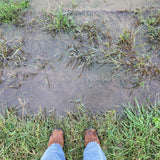
Zach Louk and I observed a hay meadow of smooth brome that was completely wiped out by armyworms this week. The question we were trying to answer was if the brome was completely dead or if it would recover. The best way to find out is to dig up some roots. In this case, the roots were already rotting, a clear indication of a lost stand. If you are questioning whether your armyworm-damaged forage stand is still alive, dig some roots and see if they are still white, or if they are decaying.
If they are still alive but obviously damaged and low in vigor, this might offer a golden opportunity to interseed some legumes and forbs into the stand this winter. Alfalfa, red clover, white clover, and birdsfoot trefoil are excellent legumes to add both high protein forage and nitrogen to the field, while forbs such as chicory, plantain, and small burnet add high mineral content and beneficial secondary nutrients like tannins and polyphenols to the forage mix. Ask us about some of our exciting new forage varieties like Big red clover, Stamina white clover, Aberlasting white/kura clover hybrid, and Endure chicory that offers significant upgrades to older genetics.
If the stand is dead, this might offer an opportunity for a complete rehaul of the pasture. You could immediately plant an annual forage like rye, triticale, or winter peas (or a combination of any of them) to still provide forage in early spring. This planting could be followed by another planting of summer annual forage like cowpeas or sudangrass next summer. Then you could plan on planting a diverse mix of top-notch genetic material next fall for decades of highly productive, good quality forage. If the pasture was smooth brome, there is a high chance that it has a high amount of the fungus that causes take-all root rot, which can be highly destructive to wheat. This is why rye is a better choice than wheat for a winter annual cereal to plant into a recently killed brome field; legumes like winter peas are unaffected by take-all root rot.
In either case, don’t hesitate to give us a call to get advice on what species and varieties fit your situation. (402) 469-6784
-Dale Strickler