Choosing the right termination method for your cover crop this spring.
Perhaps one of the greatest fears when it comes to cover cropping is failing to successfully terminate ahead of a cash crop. Failure to manage the cover crop properly at this stage can result in a real headache and plenty of wasted time and resources trying to prevent a negative impact to your cash crop yields.
That's why we encourage our customers to think through their cover crop starting with the end in mind. Ask yourself, "How do I plan to terminate this cover crop? And what will I do if that plan fails?" Selecting your cover crop is as much about your soil health goals as it is about your plan for termination. When you place a seed order, make sure you have a plan A and a plan B. Make sure you have the equipment on hand for both options so that you aren't scrambling at the last minute to get your cover crop terminated.
Each termination method is simply a tool in your toolbox—no one option is superior to all others. Rather, your method of termination will be determined by your unique context, goals, and available resources. Now, let's walk through the various options for successfully terminating your cover crop, examining the advantages, disadvantages, and best use cases for each.
Tillage
Mechanical termination or tillage is effective and timing is not as crucial as other termination methods. It is also a viable option for organic producers who cannot use herbicide. Unfortunately, tillage is a disturbance event for the soil which can be detrimental to soil health especially when tillage is practiced frequently. Tilling the soil disrupts microbiology and damages soil structure. This leads to loss of organic matter, moisture loss, decreased infiltration rates and soils that lack structure and are highly susceptible to erosion.
While we don’t advocate for frequent tillage, some soil experts argue that it has its place, and its negative impacts can be mitigated with proper management. Dr. Christine Jones, for example, says that while tillage is effectively chopping up and destroying fungal hyphae in the soil, fungal spores are quick to recolonize roots if something is planted immediately following a tillage event, preferably a diverse cover crop.
Additionally, not all tillage is equal. The equipment that you use and the depth at which you till will greatly influence the impact that tillage has on soil structure and microbial populations. If you decide to use tillage as your primary termination method, be sure to mitigate its effects as much as possible and use the method sparingly.
Pros:
- Flexible timing compared to roller crimping
- Effective for almost all species
- Widely available and familiar to most farmers
- Many farmers already plan for a spring tillage pass
- Speeds up biomass decomposition (may be a con depending on your context)
- Viable option for organic producers
Cons:
- Significant soil disturbance
- Disrupts soil biology especially mycorrhizal fungi
- Risk of exposing soil to wind and water erosion
- Weather-dependent—fields need to be dry enough for the tractor
Herbicide
If you're in a situation where tillage is not an option, or perhaps you're a dedicated no-tiller, herbicide is an excellent tool for terminating cover crops. Chemical herbicides kill plants by disrupting growth processes. FOr maximum effectiveness, apply when temperatures are at least 50°F and the weather is dry and sunny. These favorable growing conditions ensure the herbicide is readily absorbed by the plant. Always reference the label on your specific herbicide for detailed application guidelines.
Pros:
- No soil disturbance
- Flexible timing compared to mechanical methods
- Allows selective termination of certain species
- Enables planting green—plant cash crops into living cover, then terminate
- Effective for most species
- Widely available and familiar to most farmers
Cons:
- Research increasingly shows impacts on soil microbiology and beneficial organisms
- Herbicide-resistant weeds are becoming more prevalent
- Chemical inputs have ongoing costs
- Weather-dependent—needs proper temperatures and dry conditions
- Some species are difficult to terminate (annual ryegrass, hairy vetch)
- Residual effects may impact subsequent crops
- Not available to organic producers
Grazing or Mowing
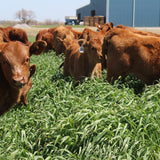
Grazing is one of the best termination methods from a soil health perspective, offering nutrient cycling and soil biology benefits. Mowing works similarly but without the livestock benefits. Both methods only terminate plants when the growing point is above ground. During vegetative growth, the growing point on most plants remains below the surface (this is why you can mow your lawn repeatedly). Once the plant reaches reproductive stage and begins flowering, the growing point rises above ground. At this stage, grazing or mowing can remove the growing point, effectively terminating the plant.
Pros (Grazing):
- Excellent for soil health—adds nutrients and microbial inoculation
- Revenue opportunity from livestock gains
- Natural incorporation through hoof action
- Can reduce biomass before other termination methods
- No chemical or fuel costs for termination
Pros (Mowing):
- Reduces biomass and delays growth
- Can buy time before final termination
- Low cost if equipment already available
Cons:
- Only works when growing point is accessible (reproductive stage)
- Most cover crops need termination before reproductive stage
- Timing challenges make it unsuitable as standalone method
- Requires infrastructure for grazing (fencing, water)
- Weather can delay grazing windows
Roller Crimping
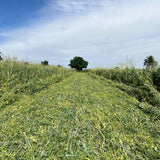
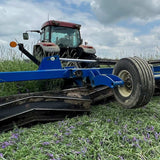
Roller crimping is gaining popularity because it's extremely soil-health-friendly. This method involves rolling a heavy drum with metal blades over mature cover crops to crimp stems and flatten biomass. It disturbs no soil, requires no herbicide, and typically uses less diesel than tillage.
Roller crimping creates a thick mulch mat that protects soil from sun exposure, suppresses weeds, retains moisture, and prevents erosion. Microbes and earthworms incorporate the flattened biomass into soil. This method also enables planting green—establishing cash crops while the cover continues growing before termination. However, roller crimping isn't always 100% effective, and timing is critical. Plants must reach proper maturity, yet fields rarely mature uniformly. Weather or scheduling conflicts can cause you to miss your window, delaying cash crop planting or allowing cover crops to go to seed and create volunteer issues.
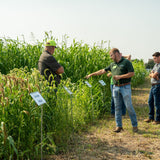
Species selection is crucial. Consult with your Green Cover sales representative to maximize success. Species that terminate well include hairy vetch, winter peas, faba beans, most cereal grains, and standard brassicas. Most clovers regrow, making them poor candidates for roller crimping.
Pros:
- Zero soil disturbance
- No herbicide inputs needed
- Creates thick mulch mat that suppresses weeds and retains moisture
- Generally uses less diesel than tillage
- Protects soil from sun exposure and prevents erosion
- Allows earthworms and microbes to incorporate biomass naturally
- Compatible with planting green strategies
Cons:
- Requires specialized equipment (roller crimper)
- Timing is critical—must crimp at proper maturity stage
- Not 100% effective—some regrowth possible
- Entire field may not be at same growth stage
- Weather or life events can cause you to miss the window
- If termination fails, cover crop may go to seed
- Species selection is crucial
Winter kill
Winter kill (frost kill) is the most soil-health-friendly and cost-effective termination method—it's completely free and requires no field operations. If you select cover crop species that will reliably die once temperatures drop, you simply wait for nature to take its course.: Frost-sensitive species die when exposed to freezing temperatures, naturally terminating without any farmer intervention.
Pros:
- Zero cost—no fuel, labor, or chemical inputs
- No soil disturbance or chemical impacts
- No equipment required
- Provides winter soil cover and protection
Cons:
- Requires careful species selection for your climate
- Mild winters can allow species to survive unexpectedly
- Limited to frost-sensitive species
- No control over timing—nature dictates the schedule
Final Thoughts on Termination
We recognize that some of the most effective termination methods—such as tillage and herbicide—are also the ones with drawbacks that can damage soil health. That's why it's important to carefully consider your goals when selecting your cover crop and give your cover crop as much time as possible to benefit the soil before using a termination tool that negatively impacts soil health.
At the end of the day, there's no perfect termination method—only the one that fits your goals, timing, and context. Each option has its tradeoffs. Some are hard on the soil, some are unpredictable, and some require specialized equipment or precise timing. What matters most is that you go into the season with a clear plan and a solid backup.
Successfully terminating a cover crop can feel like one of the riskiest steps in the whole process. With a little forethought—choosing species intentionally, knowing your tools, and watching that growth stage closely—you can turn termination from a stress point into a strategic advantage that helps you build soil health and increase resiliency on the farm. Termination isn't the enemy of soil health; mismanagement is. And when done well, cover crop termination is just another tool in your stewardship toolbox, helping you build soil that's alive, resilient, and ready for the next crop.