The Above-Ground Ecological Influence of Cover Crops
Cover cropping is a critical component of regenerative agriculture as it allows farmers to achieve multiple ecosystem services. Cover crops are also referred to as service crops since they are grown for a purpose (i.e., a service) other than their harvested products (Figure 1). For example, cover crops serve a role in reducing soil erosion, enhancing soil health, improving water quality, and altering soil microbial abundance, activity, and diversity. Annual cover crops can fill gaps in rotations when soils may otherwise be fallow to provide important agronomic benefits (e.g., erosion control, soil fertility, etc.). On the other hand, perennial crops in rotation can provide significant ecosystem services mainly derived from changes to soil properties mostly driven by limited soil disturbance, coupled with increased organic matter inputs from roots and rhizodeposits compared to annual crops. Some of the above-ground ecological influences of cover crops, for both annuals and perennials, are reported below.

Weed Control
Cover crops can suppress weeds physically, ecologically, and chemically. They compete with weed species for light, nutrients, and water, while some species of cover crops release allelochemicals (i.e., secondary metabolites produced by plants that can either benefit or harm the growth and development of other nearby organisms). For physical suppression, cover crop plants or residues left on fields in the spring can limit weed germination in the following cropping season by reducing the amount of light that penetrates the soil. Limiting weed germination over time can slow the build-up of weed seed bank populations; hence, reducing weed pressure in the long term. This is particularly important for the management of herbicide-resistant weeds. Although cover crops can be beneficial for weed suppression, the effectiveness is species-specific. Thus, selecting cover crop species based on their weed-suppressing characteristics, such as high biomass and residue production, or allelochemical response of individual weed species can be crucial.
Wildlife Biodiversity
Integration of cover crops in agroecosystems can provide habitat, forage resources, overwintering, and reproduction shelters for wildlife, particularly pollinators, arthropods, and birds (Figure 2), therefore enhancing biodiversity on the landscape. Flowering cover crops (e.g., sunflowers, Helianthus annuus, and phacelia, Phacelia tanacetifolia) provide pollen and nectar resources for pollinators during certain times of the year, such as late fall and spring, when pollinator forage is typically scarce. Cover crops can also generate a suitable microclimate environment that provides a habitat for ground-dwelling arthropods such as carabids and spiders, while the residues can provide food resources and physical protection for below-ground micro-arthropods.

Plant Pathogens
Habitat management in and around agricultural fields can provide stable environments that aid in the proliferation of natural enemy communities that moderate pest populations and damage. Maintaining cover crops can enhance natural enemy populations by providing a habitat, shelter, nectar, and alternative food for predators and parasitoids. Generally, a more diverse biological and physical environment at the surface of soils, such as that associated with cover crops (Figure 3), offers opportunities for regulating and minimizing pest populations since natural enemies are more abundant, diverse, and efficient in more diverse plant communities. Plant diversity is particularly crucial to maintaining multiple ecosystem services as plants shape trophic interactions across several levels (Figure 2).

Wind and Water Erosion
Soil erosion is the detachment and transportation of soil particles by wind or water. It results in the loss of topsoil and nutrients, therefore, leading to decreased soil productivity. Cover crops decrease the risk of erosion primarily by protecting the soil surface and improving soil structure (Figure 4). Their ability to reduce erosion is largely dependent on the amount of cover crop above-ground biomass, which varies among cover crop species, climatic conditions, and soil types.

Organic Matter
Soil Organic Matter (SOM) is crucial for maintaining soil health and providing essential nutrients and moisture that support crop growth. Formed by decomposed plant residues and soil organisms, SOM is enhanced by cover crops, which boost farm productivity and sustainability, especially in changing climates. Unlike bare soil, cover crops promote continuous growth, stabilizing farm profitability and improving soil health. They capture excess nutrients, prevent erosion, reduce runoff, mitigate compaction, and suppress pests. Cover crops also convert sunlight and carbon dioxide into soil carbon, increasing SOM over time. Research shows legume cover crops can increase SOM by 8%-114% and non-legume cover crops can increase it by 4%-62%.
Microclimate Control
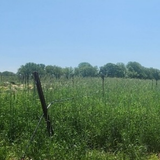
Cover crops are pivotal in managing and enhancing the local above-ground microclimate within agricultural settings (Figure 1). They have multiple functions and are critical for sustainable farming practices. They promote microclimate control via (i) the cooling effect, alleviating crop stress and minimizing soil evaporation; (ii) keeping the heat at night, protecting sensitive plants from low temperatures; (iii) keeping moisture control, maintaining soil integrity and fertility; (iv) mitigating wind speeds and wind erosion, creating a less stressful environment, which can enhance agricultural productivity; (v) the organic matter generated acts as an insulating layer for the soil, maintaining temperatures consistent for optimal root growth and microbial activity. Moreover, by capturing carbon dioxide (CO2), these crops reduce greenhouse gases and support beneficial insects which enhance biodiversity and bolster ecosystem health.
Conclusion
Understanding the myriad benefits of the practices highlighted here is essential for developing resilient and sustainable agricultural systems. Undeniably, the above-ground influence of cover crops allows for multiple ecosystem services and ecological benefits, such as an increase in soil organic matter, erosion reduction, weed suppression, microclimate control, increased pest management, and fostered biodiversity. Each of these factors is worthy of intensive research, study, and readings, and this article aimed to plant the discussion seed in your head. Collectively, they contribute to a healthier soil environment with higher organic matter levels, promoting long-term soil fertility and sustainability.
In conclusion, the multifaceted benefits of above-ground cover crops underscore their importance in sustainable agriculture and microclimate stability. Their ability to improve soil health, conserve moisture, and promote biodiversity makes them an invaluable tool for modern farmers facing the challenges of climate change and environmental degradation. Understanding these dynamics is essential for college students pursuing agricultural sciences and environmental sustainability studies. Recognizing the significance of SOM and covering crops will equip you with valuable insights into sustainable farming practices that can address the challenges of modern agriculture.