Sunshine Spill: Are you capturing all of your sunlight energy?
Bethlehem Steel once employed 300,000 people and supplied the steel for the Golden Gate Bridge, the Chrysler Building, and the first skyscrapers that defined the American skyline. By 2001 it was bankrupt, and one of the reasons historians point to is raw material inefficiency. While competitors like Nucor were capturing and reusing nearly everything that went into their mills, Bethlehem was hemorrhaging energy and wasting material at every step. Nucor didn't win because they had better ore. They won because they wasted less of what they already had.
No manufacturing company survives long by dumping its raw materials on the ground. Yet, farmers do it every summer, and most don't think twice about it.
This week marks the summer solstice, the longest day of the year and the peak of something most of us as farmers never stop to measure: free solar energy. The sun is rising before most of us are out of bed and setting well into the evening, delivering more raw photosynthetic potential in a single July day than a February week could ever match. And in wheat fields across the Plains that are or will be harvested, most of that solar energy is not hitting a green leaf and is being wasted.
Peter Donovan, founder of the Soil Carbon Coalition, has spent decades working with ranchers and farmers on how land captures and cycles energy. He calls it the Sunshine Spill, and once you hear it framed that way it's hard to unsee. God designed creation with a kind of precision that rewards farmers who pay attention. He wired temperature responses into every plant species, calibrated growing windows to geography, and designed the whole system so that something can always be growing somewhere if you know what to put in the ground. The solstice is a useful reminder that you've already received half the year's sunlight. What happens with the other half is still up to you.
Rainfall is variable. Sunshine is guaranteed. The only question is whether something is growing to capture it. That's where growing degree days come in.
Measuring Sunshine Spill with Growing Degree Days
Most farmers think about growing degree days when they're scouting for pest pressure or timing a fungicide pass on corn. But there's another way to think about GDD that gives the Sunshine Spill some practical application, and it starts by asking a simple question: how many heat units are sitting unclaimed in your fields after wheat comes off in July?
The answer, depending on where you farm, is often somewhere between 1,500 and 2,500 or more. That's not nothing. That's a full forage crop or a well-established cover crop going into fall, if you know how to use them. It's also a rough measure of how much captured sunshine you're leaving on the table.
What a Growing Degree Day Actually Is
A growing degree day is a unit of accumulated heat. Plants don't measure time in days the way we do, they measure it in warmth, and each crop has a temperature threshold below which meaningful growth essentially stops. GDD is the tool we use to track how much of that useful warmth a crop has actually received.
The basic formula is straightforward: you take the high temperature for the day, add the low temperature, divide by two to get the average, and then subtract the base temperature. Whatever's left is the GDD for that day. If the result is zero or negative, it counts as zero.
(High Temp + Low Temp) / 2 – Base Temperature = GDD for that day
Run that calculation across a full season and you get a picture of accumulated heat, which tells you far more about where a crop is in its development than the calendar date ever could. It also tells you how much sunshine-capturing potential is still available in your season.
Base 40 vs. Base 50: Why the Number You Use Matters
This is where a lot of farmers get confused, and it's worth spending a minute on because using the wrong base temperature will give you misleading numbers.
Base 50 is the standard for warm-season crops like corn, sorghum, and most summer annuals. Growth in those species more or less stalls below 50°F, so that's the number you subtract. When agronomists talk about corn needing 2,700 GDD to reach black layer, they're using base 50.
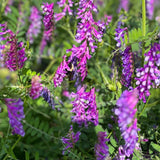
Base 40 is used for cool-season crops like wheat and rye, cool-season grasses, brassicas, and many legumes. These species can keep growing when temperatures are in the 40s, so a base 40 calculation gives you a more accurate read on their actual development. If you apply a base 50 calculation to a hairy vetch or winter rye, you'll underestimate what the plant is doing in cool weather.
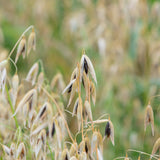
When you're planning a summer or fall cover crop or forage seeding, match the base temperature to what you're planting. A blend heavy in sorghum-sudan and sunn hemp belongs in a base 50 calculation. A blend built around oats, turnips, and clovers works better with base 40.
The GDD Left on the Table After Wheat and Rye Harvest
Winter wheat in the Great Plains typically comes off sometime between late June and mid-July. Winter rye is usually a little earlier. By the time you're done combining and moving equipment, you still have the bulk of summer in front of you and the soil temperature is warm, which means anything you put in the ground has a genuine head start.
Here's a rough look at what farmers in different regions can realistically expect in accumulated GDD (base 50) after small grain harvest through first killing frost:
-
Central Kansas / Oklahoma Panhandle: 2,000–2,500 GDD remaining after wheat harvest
-
Central Nebraska / South Dakota: 1,600–2,100 GDD remaining
-
Northern Plains (ND, northern SD, southern Canada): 1,200–1,600 GDD remaining
These are averages and they shift year to year, but the point holds: there's real growing power left in the season. A photoperiod-sensitive sorghum-sudan hybrid needs roughly 1,800–2,200 GDD (base 50) from seeding to reach peak forage quality. A sunn hemp crop can put on serious tonnage in 1,500–1,800 GDD. Sunflowers, cowpeas, and millet all fit comfortably into post-wheat windows in most of the central Plains.
In cooler northern regions where you may only have 1,200–1,400 GDD remaining, you want faster-maturing species and cool-season mixes that can continue accumulating growth as base 40 GDD after warm-season species slow down. Oats, turnips, radishes, and clovers all work in that space.
The Opportunity in a Failed or Hailed Crop
Wheat and rye aren't the only situations where GDD thinking applies. Every year, farmers face fields where a cash crop fails, gets hailed out, or gets sold off early as silage. And often, those fields sit bare for the rest of the season while the sun continues to shine.
That empty ground, especially when a crop failed in May or June, often has 2,500–3,500 base 50 GDD remaining in the season. That's enough heat to grow a serious forage crop, rebuild soil biology, and put something down that gets the field pointed in the right direction heading into next year.
A few things worth keeping in mind for failed-crop situations:
-
Check your herbicide history first. If a crop failed partly because of herbicide carryover, that same carryover will affect your options for a cover or forage species. Legumes and brassicas are often the most sensitive. Grasses tend to be more forgiving, but every situation is different, and it's worth checking plant-back intervals before you order seed.
-
Faster isn't always better. When you have plenty of GDD remaining, it's tempting to plant the fastest-maturing thing you can find. But in a field with good soil warmth and a long window, a diverse mix often outperforms a monoculture on both forage quality and soil health outcomes. A sorghum-sudan base with cowpeas, sunflowers, and a small amount of sunn hemp will typically yield more dry matter and more biological diversity than straight sudan grass, and the legumes start fixing nitrogen from the day they emerge.
-
Think about what comes next. A cover crop that terminates cleanly before your intended cash crop planting date is worth more than one that produces a little more biomass but causes headaches in the spring. Plan the fall termination window before you choose the summer species.
Putting GDD to Work: A Practical Framework
When you're standing at a field after harvest, here's a simple way to think through your GDD window:
-
Look up your expected first fall frost date and count back the number of days from today. Extension offices and NOAA both publish this by county.
-
Find average daily high and low temperatures for your area through that frost date. Most state climatologists or ag weather services publish seasonal summaries.
-
Estimate your remaining GDD using the formula above, running it day by day or using a local accumulation tool. Several university extension services publish in-season GDD tracking maps that make this fast.
-
Match species to your window. If you're short on heat units, lean toward fast-maturing cool-season species that keep accumulating growth in base 40 territory as temperatures drop. If you have plenty of GDD remaining, you have more flexibility to use warm-season species with higher biomass potential.
-
Don't forget about soil moisture. GDD tells you about heat, but it says nothing about water. A dry July in western Kansas may have plenty of heat units available and not enough moisture to germinate a cover crop without some rain. Factor in your rainfall history and what's in the forecast before you pull the trigger on seeding.
A Note on Late-Season GDD
One thing that surprises some farmers is how much useful growing time exists in September and early October, especially for cool-season species. Once you shift to a base 40 calculation, a 55°F day in late September is still adding 15 GDD, and a week of that kind of weather adds real root development and dry matter to a growing cover crop.
This is one reason that oats, turnips, and brassica blends planted as late as mid-August in the central Plains can still establish meaningful canopy before a killing frost. They're accumulating base 40 GDD during a period when a base 50 crop would be effectively stopped. If your post-wheat or post-silage window is short, leading with cool-season species and using warm-season species only as a small percentage of the mix can extend your effective growing window by two or three weeks.
The Seed Is the Easy Part
Identifying your GDD window, choosing species that fit it, and getting something in the ground is the agronomic work. The seed is just the final step, and we're happy to help you figure out which species and rates make sense for your situation.
If you've got a field coming off wheat, a hailed crop, or a silage ground that's going to sit empty, give us a call or run the numbers through the SmartMix Calculator at smartmix.greencover.com. The SmartMix Calculator actually calculates GDD requirements as you build your mix, so you can see in real time whether the species you're selecting fit the heat units you have available before you ever place an order. We'll help you figure out what fits the window you have.
God designed creation with remarkable precision, with seasons, growing windows, and temperature responses all woven together in ways that reward close attention. And that means there's often more opportunity in your fields than the harvest calendar suggests. Putting that remaining growing season to work is one of the most practical decisions a farmer can make.
For help designing a post-harvest cover or forage mix, visit send us a message or call 402-469-6784.

Cover Crops Related to This Article
Recommended Reading