Regenerative Disease and Pest Control in Orchards
The full version of this comprehensive article, which provides even more detailed insights into regenerative strategies for disease and pest control for orchards, can be found at members.acresusa.com/whole-systems-orcharding/.
Orchard crops may receive the most pesticide applications of all crops—some varieties get 20 or more per year. One of the most powerful arguments for regenerative agriculture is the potential to greatly reduce or eliminate toxic pesticide applications. After decades of proven examples, it is undeniable that regenerative farming methods can lead to farms completely free of disease. What these farms have in common is healthy soil, abundant biodiversity, and optimal plant nutrition supported by the soil and plant microbiome.
My farming career began over 20 years ago on small, highly diversified, bio-intensive, organic farms. On those mixed vegetables and polyculture orchards, disease and pests did not cause catastrophic damage. Over the years, I've farmed and consulted on many large farms with less diversity and witnessed incredible disease and pest pressure on both organic and conventional operations. There is no silver bullet—there are many ways to achieve natural resistance against disease and pests.
In all circumstances where disease and pests are abundant, the major issue is soil dysfunction—soil devoid of a healthy microbiome. This underground problem is expressed aboveground in farms that lack biodiversity, where ecosystem processes are broken. The crops have poor nutritional health and a weakened immune system, surviving only on chemical life-support. To build true disease and pest resistance, you must farm by the principles of soil health. This requires being brutally honest about your current soil condition and recognizing management decisions causing excessive soil disturbance—whether from chemicals or equipment.
Disease-Suppressive Soils
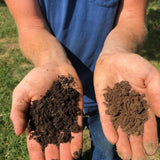
A disease-suppressive soil is well aggregated down to at least 12 inches, with abundant pore space for optimal gas flow, water infiltration, and retention. It abounds in diverse soil microbes supporting plant nutrition while regulating the soil ecosystem. These soils exhibit both anaerobic and aerobic conditions down to the micro-aggregate level. If soils are not well aggregated down to at least six inches, biological nutrient cycling and disease-suppressive properties will be poor. Well-aggregated soils reflect abundant saprophytic fungi on the soil surface, which play a critical role in pathogen regulation.

The Profound Role of Fungi in Perennial Crops
Most large orchard operators are not well educated about the life support and plant immunity role of fungi for perennial crops. All orchard crops have a strong symbiotic relationship with fungal life in both soil and plant canopy. Without abundant fungi, perennial crops cannot develop a strong immune system or natural defenses. Tree physiology—including photosynthesis, nutrient uptake, protein and carbohydrate synthesis, and disease resistance—relies heavily on mycorrhizal and saprophytic fungi. Mycorrhizal fungi transport micronutrients to the tree and support populations of nutrient-solubilizing bacteria. Without robust mycorrhizal populations, trees exist in poor health. Saprophytic fungi are equally important. These primary decomposers break down organic matter, but their most powerful role is pathogen regulation in both soil and canopy. Many common orchard fungal pathogens are saprophytic by nature. In a healthy soil ecosystem, pathogen outbreaks are kept in check by other saprophytic species. When conventional fungicides are applied, the tree microbiome is greatly disturbed. Systemic fungicides regulate fungal regrowth for two to three weeks—wiping out saprophytic fungi, including beneficial species. Spray mist also settles to the soil surface, killing more fungi and bacteria. The transition away from fungicides can be challenging but must be taken on!
Optimizing Plant Nutrition and Systemic Acquired Resistance
Micronutrients play a crucial role in enhancing plant immunity. They are the missing link in most fertility programs. When soil biology is poor, micronutrients are low in the plant. Micronutrients like iron, zinc, manganese, copper, molybdenum, and boron activate enzymes that drive formation of secondary metabolites—compounds with plant-defense mechanisms and antioxidant properties. They also strengthen leaf cell walls, making pathogen penetration harder, and are critical for carbohydrate production and storage.
When secondary metabolites are produced, the plant develops Systemic Acquired Resistance. When attacked by a pathogen or insect, the plant signals and develops an immune response. A healthy, nutritionally balanced plant grown in healthy soil can better defend itself. Perennial crops are excellent at self-defense—many species have outlived humans!

Preventing excessive nutrient loading is equally important. High nitrates in plant tissue make plants more susceptible to leaf-feeding insects and pathogen colonization. High synthetic nitrogen rates reduce protein synthesis, increasing pest pressure. Sap analysis is an important tool for managing plant nutritional balance. However, without optimizing soil health practices first, you will chase your tail on sap testing.
The Role of Bioinoculants and Biostimulants
Biostimulants provide food for microbes and help chelate nutrients. I always fertilize with a biostimulant, which allows me to greatly reduce product quantity and rate while getting better results. Products like kelp and yucca extract also enhance plant immune response and reduce stress. Combinations of biostimulants like fish and soy hydrolysates, humic acid, fulvic acid, kelp, molasses, and yucca extract can provide exceptional synergies as both soil and foliar applications. Bioinoculants in combination with biostimulants can be very powerful. I mainly recommend those made on the farm, such as compost teas and extracts brewed with biostimulants. You can also brew with a low dose of the nutrients your trees need—I call this bionutrient brewing. It creates a solution rich in organisms, carbon and nutrients.
Biopesticides
Do biopesticides work? "I hear they don't work." "They are so expensive." "If I'm going to spray, I want to know it works." I have this conversation all the time. The short answer is that biopesticides are extremely effective—when applied at the right time, when they are well understood, and when the farm has decent soil health and ecosystem function. But many have poor results on highly conventional farms. Combined with proper soil health management and balanced plant nutrition, biopesticides are a strong tool. But they are not a product-for-product replacement strategy. There are many effective bacillus products to control fungal pathogens such as apple scab, alternaria, and mildews. Trichoderma products reduce root rot pathogens. Plant-extract insecticides include neem oils, pyrethrin, thyme, cinnamon, and spinosad. To get the most out of any product, you must become a master at scouting and understanding the lifecycle of the species you are managing.
The Flaws of Orchard Sanitation
Sanitation practices—blowing, sweeping, shredding, or tilling-in fallen leaves—are a major expense in many orcharding systems. Yet I believe these practices often actually increase disease. I almost always recommend eliminating sanitation. Leaf mulch is critical for tree health as it replenishes nutrition and feeds the soil, enhances beneficial saprophytic fungi, and attracts worms. Unsanitized orchards attract more birds that feed on insects and soil larvae—free nutrients and pest control. We call this "positive compounding." When sanitation practices with tillage occur, we create negative compounding effects, contributing to farm ecosystem dysfunction and more reliance on fungicides.
Livestock Integration: The Disease and Pest Management Squad

Integrating livestock scares many orchardists. But when a farm commits to animal integration, a superpower gets unlocked. I believe livestock's greatest impact in orchards is reducing diseases and pests. When managed with adaptive grazing principles, plant diversity increases, promoting greater diversity of beneficial insects and birds. The manure, urine and saliva biology of animals enhances decomposition and pathogen regulation. Sheep increase decomposition of leaf mulch and reduce high inoculum loading. They eat fallen nuts or fruit with overwintering larvae such as coddling moth or naval orange worm. Chickens are masters at finding larvae in soil and fallen fruit and control moth species or any insect that lays eggs and larvae in soil and leaf litter. They also provide nutrients from their manure.
Building Habitat on the Farm
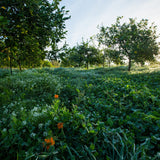
Without livestock, we can still bring wildlife to the farm. One hundred percent of the time, when orchard-floor diversity increases, pest pressure declines. European research shows organic orchards with high plant diversity and no insecticides had less apple aphid damage than conventional orchards using standard insecticides. Plant diversity alone, which brought in more beneficial insects, was more effective at controlling pests.
Orchards with diverse ecosystems have more birds of prey. A barn owl can consume up to 3,000 rodents in one breeding season. I highly recommend all orchards install barn owl boxes, raptor perches, and bat boxes. A single bat can consume up to 5,000 insects per night! Installing bat boxes is essential in my work—especially in orchards that battle moth or lepidoptera species.
Conclusion
A whole-systems approach truly is required to achieve regenerative disease and pest control. Although products and inputs were mentioned as tools, I want to make sure the reader walks away understanding that you are responsible for the conditions you create on your land.
In the words of Michael Phillips, the great orchard ecologist, "If there is immense pressure from an insect or fungal pathogen… there is a deep imbalance within the farm ecosystem that calls for immediate action and attention, which no product will solve."
Your management determines whether disease and pests are causing uncontrollable damage. The foundation of the regenerative approach is farming for soil health within the guidelines of the principles. Manage the ecosystem and utilize all the tools I have mentioned in this article, and you will begin chipping away at a more economical and less toxic approach. What you may also find is that your long-term yields improve or crop quality improves. Disease and pest resilience go hand-in-hand with quality and nutrient density.