A Systems Approach
Dennis Anderson Combines No-Till, Cover Crops, and Biologicals to Build Soil Health on His Farm
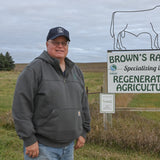
At first glance, Dennis Anderson’s farm in east central Kansas may not seem all that different from the rest. With a typical rotation of corn, beans, and wheat, his fields would look pretty similar to the neighbors. But a keen observer, especially one with a spade in hand, would quickly realize that this farm is far from typical. Strategically timed diverse cover crops adorn the landscape, building the soil and providing a home for beneficial microbes. His soil is mellow, easily penetrable by a spade. Rainwater soaks into the ground, rather than running off and forming chocolate milk-looking streams, taking the precious topsoil down to the Gulf of Mexico with it. But these things don’t happen by accident. Dennis is serious about bringing life back to the soil and taking pride in the crops he’s producing.

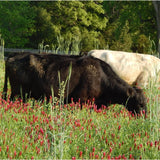
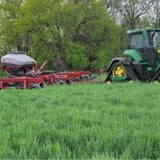
Dennis sees his farm as an intricate, ever-evolving system, and manages it as such. “The ideal rotation is corn, rye, soybeans, wheat, diverse summer cover, followed by corn and the cycle continues. We don’t always do this exact rotation, but this is what we are striving for.” Dennis also has a small cow herd and even some sheep that they bought last year. The livestock utilize the rye and summer cover crops for grazing and the sheep in particular help to keep down the bindweed. The Kansas farmer has used no-till practices for quite some time and says he hardly misses any No-Till on the Plains conferences. In fact, it was at one of those conferences that he decided to start using cover crops. “I had been thinking about starting with cover crops for a while and I heard a speaker at a conference who finally convinced me to try it. We got home and went to the local farm supply store and bought all the bird seed they had. I loaded it in the drill and planted it, and that was my first cover crop!” He has since added great diversity by using Green Cover mixes. Dennis also utilizes Elevate Ag’s biological products as part of his system. “Adding just one product is probably not going to help significantly, you need to have the whole system in place to really start seeing results.” Dennis, however, was hesitant at first to dive into the biological realm.
Doubling Down on the Bugs
Nobody wants to fall for “snake oil” or “bug in a jug” products. These formulas can be gimmicky and full of ingredients that you either don’t need or don’t want. Dennis admits he was skeptical too, and it’s true that there are a lot of companies out there trying to sell a product just to make money. Elevate Ag, however, is not one of those companies and Dennis has experienced the power of their products first hand. “Last year I bit the bullet and just decided to do whatever they recommended to me. We used HyprGrow in-furrow with fish hydrolysate on this year’s corn crop.” Because one of Dennis’s main goals on the farm is to reduce his nitrogen fertilizer use, he had not used any fertilizer on the corn crop at that point, and he wanted to use testing to guide his fertilizer decisions. Testing at V4 stage indicated that only 50 lbs. of nitrogen would be needed to raise 150-bushel corn, as opposed to the more traditional recommendation of 120-150 lbs. Dennis applied the nitrogen fertilizer and harvested 130-bushel corn in the middle of a severe drought. That was a lightbulb moment for Dennis, and he remembers thinking, “Wow, this really works!” The HyprGrow and fish hydrolysate set the stage for a healthy crop that was more efficient at working with biology, so less fertilizer was needed.

In the future, Dennis plans to do even more Haney soil testing and sap analysis to make more informed decisions with adding inputs. “I used to say that with no-till we could hang on another week compared to neighbors. I really believe with the biologicals we are using now, and the whole systems approach, we can hang on an additional two weeks. Sometimes we don’t get a rain, but sometimes we do—and it really pays off! 25-bushel beans isn’t a home run, but it’s a whole lot better than nothing.” In addition to more consistent crop harvests, Dennis has noticed that the crops look healthier, and notes that the sap testing validates those visual observations. Dennis believes so much in the HyprGrow and fish application that he bought a large applicator drone to help make it easier to cover all his acres with this protocol. “The end goal is utopia. I don’t know if we’ll ever get there, but that is the goal.” Dennis’s goal may seem lofty, but he has witnessed the power of biology firsthand, not only from Elevate Ag’s products but also from observing the native Kansas prairie. “The yields coming off from right next to this strip of native prairie are consistently 20-bushel higher and with less weed pressure. That’s the biology and the soil health at work. I’m trying to get all my soils to that point.”

Getting the Landlords on Board
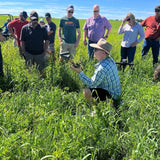
Dennis isn’t the only believer in the importance of soil health. Thanks to Dennis’s commitment to education, his landlords are now also invested in soil health. Dennis is quick to point out that this didn’t happen by accident. He is very intentional about building trust with his landlords. He makes it a point to visit with them as often as possible and show them what he is doing with the land. He generally carries a penetrometer and a spade with him to demonstrate infiltration, soil qualities, and earthworms. The landlords agree that they don’t notice nearly as much runoff as they used to. “I’ve even been known to step over to the neighbors field, and the difference is obvious when they can’t stick the spade in the ground. You can see the wheels spinning in their mind.” Dennis encourages any farmer with a landlord to build trust and be open and honest. “I think there are a lot of farmers that are scared to talk about regenerative ag or start doing these practices because the other farmers in the area will be calling their landlords and saying what a poor job they are doing, the field is all weedy, and it’s going to be a disaster.” Dennis offers that landlords are hearing about regenerative ag no matter what. “Farmers just need to be up front and honest with sharing their practices and what they are trying to do. There are a lot more landlords willing to get on board than you might think.”
A Two-Fold Legacy
In addition to getting the landlords on board, Dennis is also creating a following from the next generation. His daughter, once a vegetarian, is now excited to come back to the family operation, on both the farming and livestock enterprises. He says that the regenerative practices helped make the operation more enticing for her, creating an environment that she wanted to be a part of. “Growing up, she was always searching for a different way from the production ag system that she saw around her. Once I went regenerative, she realized what I was doing was different and she wanted to be a part of it.” Dennis hopes they can expand the operation by starting a pasture-raised meat enterprise at some point. He’s excited to have the next generation around to help learn and make decisions.

Dennis also enjoys sharing his methods with other young farmers in the area. “About a year ago, I was at a wedding reception and the next thing I know, I’m surrounded by a bunch of young guys starting out, asking me questions. They were so excited and wanted to know what I was doing and how I was doing it.” Dennis was happy to share his contact information, and now some of the guys send him Snapchats of what they are up to. “One young guy was super excited about his soybean crop. He saw a 15-bushel increase in yield where he had rye planted the spring before. He wants to start using some HYPRgERM and getting more biology out on his fields.” Dennis is hopeful, seeing the younger generation excited about this new way of farming and being eager and fearless enough to try things out.
Some Advice
While working with these young farmers, Dennis is known to share some words of advice. “You need to take pride in what you’re growing. In the long run we need to get away from selling commodities, and be creative in how you market your product.” Currently all of Dennis’s products are going into the commodity system, but he sees more value in products grown in regenerative systems and an opportunity to meet consumer demands for higher quality. Dennis encourages people to start now and test everything you do. “Get started, get out of your comfort zone, try things on a few acres. Have a backup plan, a backup plan, and another backup plan.”
Get started, get out of your comfort zone, try things on a few acres. Have a backup plan, a backup plan, and another backup plan.
Dennis also notes that observation is key and he consistently goes back to the question, “Why are we doing this?” He admits that farming regeneratively is not easy. “It’s hard to figure some of this regenerative stuff out—the biology, no-till, cover crops, etc.—but it’s also hard to sit in the banker’s chair and ask for money.” Dennis values the power of personal relationships and makes it a point to go to conferences, meet people, and ask questions.

Cover Crops Related to This Article
Recommended Reading