What to do after a hailed out cash crop
Many of us know how it feels to experience crop devastation due to extreme weather. Whether that’s from hail, tornado force winds or flash floods, it’s never a good feeling to visit that damaged field after a season of hard work. Fortunately, there are many plan B options available to help capture some revenue after a lost crop.
Utilizing Livestock
If you have livestock, you may already be considering what forage options you could get planted following your lost corn crop. Depending on the time of year, and what your herbicide program was, there are many warm season cover crops that would produce a lot of valuable forage when planted mid-summer and several options yet for later cool season plantings into fall. For example, ryegrass for grazing is a popular option and you’ll want to wait to plant until August, as it will go dormant in temperatures 85 degrees and above.
If you don’t have cattle, have you considered asking your neighbors with livestock if they could use some late summer or fall grazing?
Get familiar with your previous herbicide program
The herbicide program you utilized on your corn crop may influence which cover crop species will successfully germinate and it will influence if it is safe to graze. Before planting, check the labels of each product used to see what germination and grazing restrictions might apply to certain plants. The grazing interval period will vary depending on what products were used and what forage species you'd like to plant. If you come up with specific questions about label, be sure to consult your local chemical rep or agronomist.
Creating your own test plot
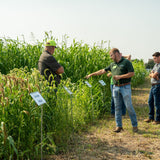
In some cases, where much of the local area experienced crop damage, you may have a week or so before you hear back from your busy crop insurance agent. If this is the case and you have to wait before planting, you can go out into your field and rake in a small “test patch” of cover crop seed to observe if anything is impacted by residual herbicides. This way you’ll know for sure which species are good to go before planting the entire field.
When making a mix where residuals are a factor, it’s typically best to omit certain plants, like legumes, that are more sensitive to herbicide. In the case of following corn, you’ve already got excess nitrogen out there so you don’t need to worry about fixing any nitrogen with legumes. By leaving legumes out, these mixes will also be much cheaper and getting a mix out there will help to tie up that excess nitrogen to avoid leaching.
We know for sure that open pollinated corn or popcorn would be fine with any corn herbicide program and won’t cross pollinate with the dent corn so organic guys don’t have to worry about GMOS. BMR grazing corn is extremely productive and palatable and works well as an early fall grazing option. Popcorn is not as palatable but the seed size is smaller which lends itself to easier seeding with a drill and more seeds per pound. If you do decide to plant popcorn, talk to the insurance company to explain that the popcorn is not intended for harvest but strictly as a cover crop.
Whether you’re planting an ultra-diverse forage mix to make back some lost revenue or planting a simple mix for the benefit of living roots and tying up nitrogen, it’s always a good idea to consider all your cover crop options after a major crop loss. Give our team a call today at 402-469-6784 or fill out this form to have a sales representative reach out to you.