Are You Capturing God’s Gift of Late Season Rains?
Farmers across the central US are sitting at a standstill waiting to get out in the fields to start harvest for the 2026 season. Unseasonal rains in high amounts have hammered down on the region leaving grain soaked and fields too wet to run equipment through. What can be done during a time like this? Many of us, whether we’d like to admit it or not, could have been heard complaining a few months ago about the lack of rain we received during the summer months this year. And now, God is blessing us with enormous amounts of rain, in some areas 3 inches in one day. But the timing does not fit within the conventional paradigm. It’s late September, our crops are finished growing, they could have used this rain months ago.
Many areas will experience devastating flooding as soils become saturated and the scarcity of live plants do their best to drink up as much of the excess. If this is the situation you are facing, know that you are in our prayers.
While we’re feeling frustrated and anxious waiting for these blessed rains to let-up, here is some food for thought.

Is the rain coming at the wrong time or is the system flawed?
Many of us are watching those precious inches of rain run off into the ditches. Our crops are no longer growing, this rain is of little use to us at this point. How does the saying go, "beggars can’t be choosers”? We cannot predict when God will bless us with rains, or how quickly they will come, but we can diversify our farming systems to capture as much rain as possible when it does fall.
Our Contract Seed Production Manager, Scott Ravenkamp, ranches in northeast Nebraska which has experienced one of the worst droughts on record this year. Many of his neighbors are facing similar frustrations of delayed harvest and rain at the wrong time. Scott shared some thoughts with us from the cab of his skid steer.
“Most of the rain came way too late for 2026 crops so if you think about it a corn and soybean farmer is at least a year from cashing any checks from these rains. A Kansas wheat farmer might be nine months away. And all of that is pending continued rain. We could easily not get rain next summer and in that case they won't get any value from this moisture save for an insurance check, the very same moisture that is one of the freebies God blesses us with. Meanwhile all the conventional ag input suppliers are out there pedaling product pricing for the coming year so we can do the same thing again and hope for different results, the very definition of insanity*.”


Scott’s opinions may come off as strong but they’re not from a place of idealism. Scott grew up in eastern Colorado and spent much of his farming career growing grain on just a few inches of moisture. He understands the struggle of farming in drought and it has radically shifted his mindset on what farming should look like. His reflections beg the question…
Are you capturing God’s gift of late season rains?
The conventional row cropping system is not designed to maximize rainfall capture. We desperately need rain during critical growth stages of the plant and if we get it when our crop should be drying down, it can be disastrous. We leave our fields completely bare for almost half the year. These facts make the system vulnerable and subject to failure with the increasingly more volatile weather patterns we see. What would it look like to move away from this rigid system and diversify to ensure you against these “abnormal” years?
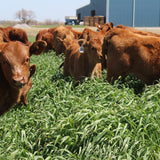
One option is growing forage for livestock. Most forage farmers are capturing every drop of these late season rains and seeing immediate returns. Scott shared the following observations: “It started raining at like 4 in the morning and by sunup I think the perennial grass had grown an inch. It really made me think about how the system should be designed to work. Our "native" pastures are really taking advantage of this moisture right now. We even have yucca plants blooming again.”
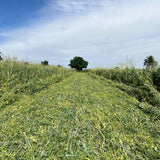
Perennial grasses that may have looked worse for wear this summer are making quick work of these rains. During drought they go dormant, specifically designed to wait out the hard times for better days ahead. And when the moisture does come, those deep roots help the soil soak up every last drop.
Or maybe your rotation allowed you to plant a fall forage crop in late summer, these rains would be perfect timing for a cool season blend like the Winter Grazing Mix or the Fall Cattle Builder. The diversity of plants in a cool season mix will convert these precious inches of rain into nutrition and tonnage for livestock.
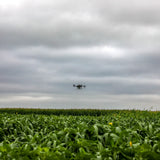
Perhaps you’ve switched up your strategy to organize a drone seeding. These late season rains would be excellent timing to help establish a flown-on cover crop. If you can’t get wheels in the field, you can get a drone above it and still get a cover established even if your harvest timeline is pushed back.
One thing is certain, we cannot keep doing the same thing and expect different results, that is the definition of insanity*. You may not be able to pivot your strategy right now, but take time this winter to consider what changes you might be able to make to your operation to improve resilience. What could you do differently to make sure that you capture every drop of rain that falls next year, regardless of the timing?
If rain delays have you tweaking your fall cover crop plan and you have questions, feel free to call into our team to discuss a new plan. 402-469-6784
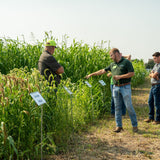
And if you’re looking for a community of out-of-the-box thinkers like Scott, consider attending a Green Cover event this fall or winter.
*Albert Einstein quote: “Insanity: doing the same thing over and over again and expecting different results.”