How to Successfully Drone Seed a Cover Crop
Drone seeding cover crop can be a very useful option when trying to establish a cover crop earlier in the season or if fields are too wet to get a tractor in them. More and more small businesses are popping up offering drone seeding and the technology is only becoming more accessible and affordable. This method will have reduced germination since it is more difficult for the seed to achieve seed to soil contact for proper water absorption. To maximize broadcasting success, follow these guidelines:
- Select mostly smaller seeds (clovers, brassicas, millets, teff grass, etc) as they require less water for germination than do larger seeds. Small seeds can also more easily achieve seed to soil contact.
- Watch the weather forecast closely and try to broadcast seed right before a rain event or irrigate the field if that is an option. The rain drop impacts will help the seed get into contact with the soil as well as provide the moisture required for germination. Timing ahead of a rain can be difficult, especially in more arid environments, and thus broadcasting is generally used in higher rainfall areas or in fields that can be irrigated.
- Increase the seeding rate by 50-100% over a drilled rate. Some of the exposed seed on the soil surface will get eaten by crickets, beetles and rodents and some seed will never reach the soil surface where it can germinate. It will become a numbers game so increasing the rate of seed will increase your chances of success.
Considerations for Drone Seeding into a Cash Crop
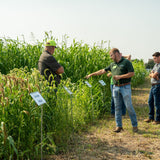
If you're drone seeding cover crop into a standing cash crop like soybeans or corn, there's a few additional factors to consider.
Avoid broadcasting too soon. If the leaves of your corn crop are still upright, much of the seeds will be caught in the leaves and never reach the soil. Seedlings broadcast too soon may also be starved for sunlight under a dense canopy that has not begun to dry down yet. A good rule of thumb for broadcasting cover crops into corn is to wait until senescence (leaf die back) has started. In beans, wait until a good amount of the plants have turned yellow.
As always, feel free to call into our team with specific questions and we will give you our best recommendations based on your context. 402-469-6784