Livestock Integration
As with any agricultural enterprise, the health of our soil is paramount to our success. Integrating livestock is often either completely overlooked as an option for farming operations or undervalued as a tool in livestock operations. The opportunity exists to take advantage of grazing management as a tool to increase ecological function while providing positive economic returns.

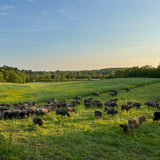
Whether we are focused on integrating livestock into a cover crop system on cropland or a native rangeland ecosystem, managing the grazing by properly integrating livestock can have significant impacts on the health of our soil resource. Properly integrated livestock can aid in nutrient cycling, as up to 85% of the nutrients consumed during the grazing process are returned to the field in the form of manure and urine. Those nutrients are then distributed across the field by managing paddock access through rotational grazing management strategies. These strategies are governed by managing four core tenants of grazing; the timing, intensity, frequency, and duration of the grazing event.
Properly integrated livestock can aid in nutrient cycling, as up to 85% of the nutrients consumed during the grazing process are returned to the field.

Timing refers to “when” to graze. Specifically, when to begin and when to stop grazing. When to start grazing differs with the forage type and seasonality. In general, begin grazing when enough forage growth has occurred to meet target demand, and allow adequate plant recovery. Stop grazing when the appropriate utilization of the target species has been removed. Timing also refers to seasonality. In perennial systems, adjust the rotation so that pastures are grazed at different times in subsequent years.
Intensity refers to “how much” to graze. Most forage species produce double what they need to sustain themselves. Hence, 50% of the top growth can be grazed without hindering root development. In general, focus should be placed on the half of the plant remaining following the grazing event. Managing to leave 50% allows the plant adequate photosynthetic material to recover. The intensity can be variable; however, greater utilization rates can occur if the plant is allowed adequate time to fully recover. Recovery time is the priority. This amount will differ given the forage type and season of use.
Frequency refers to “how often” to graze. Frequency determines the grazing recovery period. In general, recovery periods should be long enough to allow the forage to fully recover before being grazed again. Recovery periods are typically shorter during periods of fast growth and longer when forage growth slows down. Adequate recovery periods are often the factor that drives success or failure in rotational grazing systems.
Duration refers to “how long” to graze. Duration is in reference to the actual grazing period. The grazing period length depends on the tenets listed above and is largely driven by time. Overgrazing is a function of time, not intensity. The grazing period should be timed to limit livestock from grazing the same plant twice. If livestock have access to plants for too long, they will graze them twice during the same grazing period, limiting recovery.
Given a proper overall ranch stocking rate, a tool often overlooked is stock density. Stock density is the number of animals in a specific area, and it can be used as a tool to meet multiple ecological outcomes while providing positive economic returns. Managing stock density allows the grazing manager the freedom to balance the timing, intensity, frequency, and duration of grazing on any forage type and ultimately provide positive soil health returns.
Integrating livestock into farming operations isn’t just a means of managing animal resources—it’s a powerful and often underutilized tool for enhancing soil health, biodiversity, and overall ecosystem function. By strategically managing grazing through careful consideration of timing, intensity, frequency, and duration, farmers can optimize nutrient cycling, foster plant resilience, and reduce the need for external inputs. The added economic benefit, coupled with environmental gains, makes rotational grazing a compelling choice for regenerative agriculture. As we look toward a future of soil building practices, livestock integration offers a practical pathway to both restore and enrich our soils, securing long-term productivity and ecological balance.