Plant-to-Plant Nutrient Transfer
The Role of Mycorrhizal Fungi in Soil
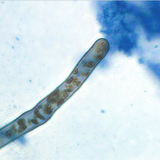
Regenerative agriculture, also known as soil regeneration, is critical to repairing nutrient, water, and carbon cycles broken by conventional agriculture, climatic stressors, and geopolitical issues. The standard agronomic approach to these cycles is to apply the recommended amount of nutrients to achieve a yield goal. If fertilizer is not used, soils are being ‘mined’ for nutrients and yields cannot be maintained. However, many regenerative producers are obtaining yields above their inputs and measuring increases in nutrient density with minimal or no yield declines. An ancient multi-partner system is literally at the root of closing this loop in nutrient cycling, addressing food insecurity, and building resilience. Since the beginning of land plants, arbuscular mycorrhizal fungi have formed partnerships with plants to supply nutrients to individual plants and transfer nutrients between plants in biodiverse mixtures. These mixtures are present in agricultural settings such as pastures, rangeland, or cropland with cover crops or poly-cropping. In mixtures, the same mycorrhizal fungus can grow into roots from the same plant as well as multiple plants – even different plant species. The fungal hyphae connect multiple plants together with a ‘pipeline’ which moves nutrients, water, and carbon between plants, soil and microorganisms. Because the mycorrhizal fungi penetrate root cell walls and form highly branched structures (i.e. arbuscules) against the cell membrane, nutrients and water are delivered right to the plant where they are easily absorbed with no losses. In exchange, the plant releases carbon compounds through the cell membrane which the fungus absorbs.

Providing Different Nutrients Based on Plant Needs
While a plant is growing, its nutrient needs change on a continuous basis in order to conduct different activities – growing leaves, stems and roots; combating pests and diseases; and reproduction. Because cells, proteins, enzymes, tissues, etc. have different concentrations of elements – carbon, nitrogen, phosphorus, sulfur, iron, magnesium, etc., the nutrients need to change to reflect the activity. When the carbon compounds are exuded from the root cells and absorbed by the mycorrhizal fungi within the roots or microorganisms in the soil, they act like an ‘order’ for a particular nutrient. In response to this ‘order’, an army of microorganisms are activated to fill the ‘order’. In some cases, the ‘order’ may be overfilled, providing more of an element than the individual plant can use. In other cases, some plants have particular mechanisms to acquire higher concentrations of certain elements. For instance, buckwheat enhances phosphate availability and absorption. Finally, legume plants form a symbiosis with nitrogen-fixing bacteria to convert nitrogen gas in the atmosphere to ammonia and nitrate. If these excess elements are released into the soil, they may be lost through volatilization, leaching, runoff, or erosion, or become unavailable. However, when mycorrhizal fungi are present in the plants, these excess elements are ‘piped’ from one plant to another through the fungal pipeline.

The Mycorrhizal Pipeline
This system of nutrient, water, and carbon flowing between plants, microorganisms, and soil is occurring continuously on a microscopic and molecular level which is not visible or easy to measure. A number of research studies have been used to illustrate specific examples of this system. The best example is a system with five partners: two plants – a legume and non-legume – and three microorganisms – arbuscular mycorrhizal fungi, nitrogen-fixing bacteria, and phosphate-solubilizing bacteria. In this system, nitrogen fixed by the bacteria in the roots of the legume is transferred from the legume to the non-legume plant through the mycorrhizal pipeline. However, nitrogen fixation requires a large amount of cellular energy to biochemically break the triple bond in nitrogen gas and bind hydrogen to this nitrogen to form ammonia (NH3). The energy needed for this chemical reaction comes from free electrons charging the bacteria. 
Phosphate and Mycorrhizal Fungi
Electrons are freed when a bond in ATP (adenosine triphosphate) is broken between the adenosine and one of the phosphate groups creating adenosine diphosphate. The adenosine diphosphate (ADP) continuously goes through a cycle where a new phosphate group binds to it to become ATP again. To convert one molecule of nitrogen gas to ammonia, this cycle of ATP to ADP and back to ATP needs to occur 16 times which increases phosphate demands in this system. Because phosphate is not naturally available in soil, phosphate-solubilizing bacteria attach themselves to mycorrhizal fungi to increase phosphate availability and supply plant and nitrogen-fixing bacteria needs. By attaching themselves to mycorrhizal fungi, carbon in the fungal pipeline which comes from the plant goes to phosphate solubilizing bacteria. These bacteria use this carbon to make the enzymes needed to make unavailable phosphate available. In summary, research studies used radioactive versions of phosphate, nitrogen gas, and carbon dioxide to track plant-to-plant nutrient exchange of nitrogen from a legume plant to a non-legume plant and phosphate from the soil into both plants through the fungal pipeline. Carbon in carbon dioxide is transformed into carbon compounds which are released in the roots and absorbed into the mycorrhizal fungi requesting phosphate and nitrogen. In the legume plant, the nitrogen request goes to the nitrogen-fixing bacteria where nitrogen gas is converted into ammonia. This ammonia goes directly into the legume plant or into mycorrhizal pipeline and then to the non-legume plant. The phosphate ‘order’ from the legume and non-legume plant goes from the pipeline into phosphate-solubilizing bacteria. As ammonia in the legume decreases, additional ‘orders’ are placed for phosphate on behalf of the nitrogen fixing bacteria.

This is just one example of the many plant-to-plant nutrient transfer processes which are occurring for multiple nutrients between many plants in biodiverse communities. Since these plant-soil-microorganism systems do not rely on inputs other than carbon dioxide, nitrogen gas, soil minerals, and water—nutrient cycles which have been broken by fertilizer application—they are essential to repairing these nutrient, water, and carbon cycles.