

Are Your Plants Getting the Best Form of Nitrogen Possible?
Hairy vetch is often touted as the best cool season legume cover crop. It is very cold tolerant, grows tons of biomass, fixes a significant amount of nitrogen and suppresses weeds exceptionally well. When planted as a mix with rye, this combo is nearly unstoppable in terms of weed suppression. In addition, this grass and legume combination packs a punch in fertilizer delivery. And not just any fertilizer, it's the right kind of organic nitrogen that crops need to grow efficiently. This natural weed and feed package might be exactly what you need as a fall cover crop.
Suppress Weeds
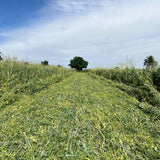
Every year we plant rye and hairy vetch in some capacity on our farm in Bladen, Nebraska. Like many regenerative farmers, we’ve come to appreciate the benefits of managing these crops to control weeds throughout the season. Both rye and hairy vetch contain allelopathic properties that make it difficult for weed seeds to germinate in their presence. In addition, both of these plants produce tremendous amounts of biomass. We frequently observe a mix of rye and vetch to produce 3-4 tons per acre of biomass when planted in the fall and allowed to grow through the end of May. This means corn planting is delayed by a couple weeks or so but with warmer soil temperatures at the later planting, seeds germinate and start growing very quickly as to waiting in the ground for 10-14 days before sprouting.
Weeds are simply a sign of underutilized resources ie. sunlight, water and nutrients. When weeds pop up, the environment is saying “I have enough energy and water to produce a plant so I’m going to keep the soil covered and grow a quick establishing plant. By planting a cover crop and using that cover crop as mulch we keep the soil covered and those weed seeds have no reason to germinate because those nutrients are being utilized properly and to their fullest extent.
Feed the Crop
Rye and vetch also contribute significantly to the fertilizer for your cash crop. We’ve observed hairy vetch to contain anywhere from 150-200 pounds of nitrogen per acre. This nitrogen that exists in the plant slowly releases back into the soil when it starts decomposing. We can expect about half of the total nitrogen in the plant to be available for the cash crop to utilize in that growing season.
 Not all nitrogen is the same. Nitrogen in the form of nitrate is commonly applied to crops to supply this nutrient. Nitrate is the water soluble form of nitrogen that is easily taken up by the plant through water. Unfortunately, this form of nitrogen, because of its water solubility, makes it highly susceptible to leaching and run-off, ending up in water sources. Plus, plants need to expend energy to use that form of nitrogen. Ultimately plants want nitrogen to build proteins. Nitrate is a building block for nitrite, which is a building block for ammonium which is a building block for amino acids which, ultimately, are the building blocks of proteins. So to create those proteins plants use energy to convert nitrate into protein. As a legume, hairy vetch forms associations with nitrogen fixing bacteria that take atmospheric nitrogen in the form of N2 and convert it to plant available nitrogen like ammonium. When the plant receives nitrogen in the form of ammonium, it requires less energy to convert it to proteins. Plants take in a finite amount of energy everyday through photosynthesis. The less energy they use to convert compounds, the more energy they can devote to building tissue and fighting off disease.
The Ultimate Weed and Feed
So if you’re looking for a cover crop to get started with this fall, rye and hairy vetch might be exactly what you need. Both contribute significant biomass and the hairy vetch (along with billions of helpful microbes) pulls down nitrogen from the atmosphere, making it accessible to the next crop. With proper management, this cover crop combination helps reduce the need for chemical herbicides and synthetic fertilizers. Give us a call today if you’d like more info on planting a cover crop on your operation this fall. 402-469-6784
This article is based on information from a trial done on the farm at Green Cover in 2020. Special thanks to Dale Strickler for the agronomic information provided in the video. The full video is available on our YouTube channel.


TSwampy
August 21, 2026
What is the recommended method of termination in the spring? Is this something you would cut for hay, then till or apply herbicide? Or do you crimp and no-till into the rye/vetch cover? I have soybeans coming off next month and would like to plant a cover soon before corn next year.
Michael Poulsen
August 20, 2026
Hi,
Is the rye you are referring to ryecorn, not ryegrass? i’m not sure whether any hairy vetch is used in New Zealand.