From Soil to Human Health
The Work of Dr. van Vliet's Lab at Utah State University's Center for Human Nutrition Studies
Linking Agricultural Management to Nutrient Density and Human Health
At Utah State University's Center for Human Nutrition Studies (CHNS), our mission is to bridge the gap between agricultural management, food composition, and human metabolic health. Under my direction, our research group takes a "farm to table to us" approach: we investigate how on-farm practices influence the nutrient-density of foods and, ultimately, their effects on human physiology.
Our central focus is on nutrient density—the spectrum of health-promoting compounds found in foods—and in our nutrient density testing1 we go far beyond the basic macronutrients and vitamins commonly listed on Nutrition Facts panels. We explore how soil health, plant diversity, and animal management interact to shape the nutritional and metabolomic profiles of both animal and plant foods. These analyses are conducted using omics-based profiling, which uses advanced mass spectrometry techniques that allows us to quantify thousands of compounds. The resulting "food-omics" data reveal how regenerative and agroecological systems foster greater nutritional and biochemical complexity in the food supply.
Building a Systems-Level Understanding
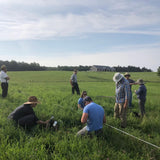
Our work at CHNS recognizes that human health cannot be separated from the health of the soil and ecosystems that support agriculture. Research in our lab routinely integrates collaborations among soil scientists, agronomists, animal scientists, food chemists, and nutritionists to trace nutrient flow through the entire food system.
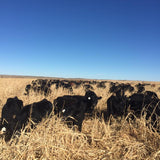
For instance, one of our flagship projects—the Beef Nutrient Density Project, supported by the Bionutrient Institute, Grantham Foundation, and Applegate, LLC—has examined beef samples from diverse production systems across North America. Using metabolomics, we identified hundreds of metabolites influenced by grazing diversity, forage species, and soil conditions. For example, findings recently published in npj Science of Food2 from a USDA-NIFA-SARE project demonstrated that beef raised on regenerative grass-finished systems contains elevated levels of omega-3 fatty acids and phytonutrients derived from diverse forages consumed by the cattle, compounds known to support anti-inflammatory and cardiometabolic health. We also found that pasture soils were healthier compared to neighboring feed crop fields, and even tracked a compound called ergothioneine, a soil-derived antioxidant all the way into the meat, being higher in grass-fed beef. We have made similar findings in dairy systems, work that was published in Food Bioscience.3
This research provides a mechanistic link between soil health and human health, supporting the idea that management practices promoting soil microbial diversity also enhance the nutrient richness of food. Importantly, these results give farmers quantifiable feedback: improvements in pasture composition and soil organic matter can directly translate into a higher nutritional value of the meat and milk they produce.
Collaborations with Farmers and Data Interpretation Support
A defining feature of our work is direct collaboration with farmers and ranchers. Producers across the United States and internationally send us food samples—beef, milk, eggs, nuts, grains, fruits, and vegetables—for nutrient density analysis. (More information on this can be found on our website: stephanvanvliet.com/nutrient-testing.) Through these services, we help producers interpret their data in context, offering comparative metabolomic and nutrient density reports that connect their production practices to measurable differences in food quality and nutrient density. These partnerships are not merely transactional. They are bidirectional learning relationships: we gain valuable insights into on-farm realities, and farmers gain scientific context for their management decisions and data that they can use to educate and market to consumers. The interpretation support we provide often includes consultations via webinars, field days, and one-on-one sessions where we review metabolomic dashboards and nutrient profiles. We explain not only what compounds are present but also what they mean—how polyphenols, carotenoids, and omega-3 fatty acids relate to soil composition and potential human health outcomes. This practical translation of laboratory science into farm-level knowledge has made the Center for Human Nutrition Studies a trusted partner for many producers.
Research Infrastructure and Technical Capabilities
Our nutrient profiling work relies heavily on state-of-the-art analytical instrumentation, including two Sciex QTRAP 7500 LC/MS-MS systems, a GC-FID system, and an ICP-MS system. These instruments enable high-throughput quantification of hundreds of nutrients per sample and are used for our metabolomics work that studies phytonutrients, carotenoids, vitamins, minerals, and other bioactives.
This capacity allows us to process large multi-site studies that span hundreds of samples from farms across diverse regions. Each dataset undergoes multivariate statistical analysis to identify biochemical markers of soil, plant, and animal health. These data are then integrated with soil carbon, microbial diversity, and forage composition metrics—creating an interconnected picture of agricultural nutrient flow.

In parallel, we conduct human clinical trials at the Center for Human Nutrition Studies to assess how these nutrient-dense foods influence human metabolism. For example, in a 16-week randomized feeding study, participants consumed meat and eggs from pasture-based vs. conventional systems. We found the omega-3s in the blood of people increased and that their omega 6:3 ratio in their blood improved—nutrients that support cardiovascular, cognitive, and anti-inflammatory pathways. Our work found that, contrary to popular belief, regular consumption of pasture-raised meat and eggs can measurably raise circulating omega-3s and improve the omega-6:3 ratio in humans, as we observed in our study that will be published next year.
Recent Research Highlights
Our team's publication record underscores this systems approach:
- 2025: Soil and pasture health underlie improved beef nutrient density determined by untargeted metabolomics (npj Science of Food) demonstrated the direct biochemical link between regenerative grazing systems and enhanced beef nutrient density taking it all the way from soil to plant to animal. This was the first study in beef systems to do so.
- 2025: Agroecological practices in U.S. dairy systems enhance omega-3 and phytonutrient levels in milk (Food Bioscience) revealed that diverse forage management can increase milk quality for consumers. Like the beef study above, we also studied soil health in this study and found that the farms with the healthiest soils produced the highest quality milk, with biodiversity sitting at the center of this.
- 2024: Fatty acids and secondary metabolites can predict grass-finished beef and supplemental cattle feeds (npj Science of Food) showed that we can tell whether beef was truly grass-finished just by looking at its fatty acids and phytonutrients. Using machine-learning models, we accurately distinguished beef from cattle finished on diverse pasture-based diets versus more confined, supplemented systems
- 2024: Pasture-finishing of cattle in Western U.S. rangelands improves markers of animal metabolic health and nutritional compounds in beef (Scientific Reports) showed that grazing biodiverse rangelands improve animal health, welfare, and nutrient density compared to feedlot finishing on concentrates.
Collectively, these studies illustrate that farming practices that restore soil health can simultaneously enhance the biochemical integrity of food. Through CHNS, we collaborate with federal agencies (USDA-ARS), industry groups, and nonprofit foundations. These partnerships extend our reach beyond the laboratory to real-world food systems. We also maintain close ties with farmers and by training graduate students and research staff in both analytical chemistry and on-farm engagement, CHNS functions as a living laboratory for applied systems nutrition research.
Farmer Engagement and Outreach
Beyond academic publishing, our team invests heavily in translational outreach. Our goal is to move nutrient density testing from the academic niche to a farmer-friendly diagnostic tool. By offering nutrient density testing and demystifying complex datasets and relating it to soil, forage, and animal management, we help farmers evaluate whether their practices are achieving the outcomes they desire. This direct engagement has also generated feedback that shapes our future studies—for example, focusing on fruits, vegetables, nuts, grains, and other crops as our work evolved beyond meat and milk. Our team often provides webinars, gives interviews, and appear on podcasts to ensure the information is provided to stakeholders.
Toward a Regenerative Future
The collective evidence from our lab and collaborators is starting to support a simple but powerful conclusion: when we improve the ecological foundations of agriculture, we improve the biochemical quality of our food and, which can extend to human health. Our work demonstrates that soil organic matter and microbes, plant diversity, and grazing management are not just environmental metrics—they are nutritional variables that determine the density and diversity of beneficial compounds in food. At the Center for Human Nutrition Studies, we see farmers as co-scientists in this effort. Together, we are redefining what "nutrient-dense" means—not as a marketing label, but as a scientifically measurable outcome rooted in soil ecology, farm management, and animal health.
References
- "Nutrient Density Testing." The Van Vliet Lab, stephanvanvliet.com/nutrient-testing/
- "Soil and pasture health underlie improved beef nutrient density determined by untargeted metabolomics in Southern US grass finished beef systems." npj Science of Food, www.nature.com/articles/s41538-025-00471-2
- "Agroecological practices in United States North Central dairy systems enhance omega-3 and phytonutrient levels in cow's milk." Food Bioscience, Volume 73, November 2025