

Rotational Grazing - Encouragements and Considerations
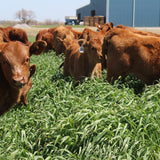
It’s no secret that rotational grazing takes extra work. Anybody who’s ever set up polywire, taken down polywire, hauled water, and moved mineral tubs knows it’s a completely different ball game than the “set and forget” method. At some moments it may not seem like it’s worth all the extra effort. Yet, rotational grazing is growing in popularity as livestock managers find great success in mimicking the natural herd migration tendencies. If you are grazing livestock this summer consider utilizing some form of rotational grazing to maximize your plant biomass production, improve soil health, and extend your grazing days.
What is rotational grazing
Rotational grazing (or adaptive grazing, intensive grazing, whatever you may call it) is simply the best way to implement grazing on any piece of ground not only to maximize forage efficiency, but also to have the most positive impact on the land. No matter what form of rotational grazing you use, strategically moving the livestock across the land to mimic natural grazing cycles (a grazing event followed by a much longer period of rest) is the best way to regenerate an ecosystem with livestock. To learn more about specific grazing management strategies check out these resources.
https://www.noble.org/regenerative-agriculture/livestock/what-is-high-stock-density-grazing/
https://grazer.mgcafe.uky.edu/rotational-vs-continuous-grazing
https://www.climatehubs.usda.gov/hubs/international/topic/rotational-grazing-climate-resilience
Herd Health Linked to Soil Health
Rotational grazing helps improve herd health by breaking up the parasite cycle. This is especially important with young animals in the picture as their immune systems are still developing and growing strong. When you rotate the animals through a pasture, and give areas sufficient rest, parasites from manure are broken down by the biology in the system, helping to reduce the impact on the animals.
If you are moving the livestock you inevitably need to move their water and mineral sources. After a rain event, things can get pretty muddy around these two high traffic areas. To reduce the impact to the land, try moving these sources around and try to choose the drier spots in the pasture for the livestock to congregate.
A healthy herd starts with a healthy pasture, which only comes from healthy and high functioning soil. Giving pastures ample time to rest allows not only the plants to regrow, but also the biology to be fed by the leftover residue, the manure left from the livestock, and even the saliva from the grazing event. All these components help to feed the biology that already exists and add more diversity to the underground ecosystem of microbes.
The Key to Success is Rest
Rest is one of the most overlooked aspects of rotational grazing, but it is the key that makes this system more efficient than set stock grazing. Historically, herds of ruminants migrated across the landscape, never staying in one place for very long. They were drawn to new tracts of fresh forage and pushed along by roaming predators. Staying on the move was their key to survival, and how the grasslands adapted and built incredible stores of energy rich topsoil. A single herd of 10,000 buffalo would have demolished an area as they moved through, grazing, trampling, and defecating on everything in their path. This was a huge disturbance, likely leaving the land looking overgrazed. The key, however, was the amount of time the land had to rest. These herds likely wouldn't be back to the same place for 2-3 years. That amount of time allowed the grass and forbs to regrow stronger and cycle nutrients into the soil.
That’s not to say livestock managers need to wait 2-3 years before grazing a section of land again. In fact, when grazing an annual cover crop, a rest period of 2-3 weeks might be sufficient given the right growing conditions. Learn more about monitoring pastures
Reap the Benefit of Diversity
Another component to consider is species that add plant diversity and medicinal value to a mix. Animals will selectively graze on plants that contain the minerals and vitamins that their bodies are lacking. This is why you might observe cattle eating seemingly undesirable weeds like thistle, as they’re self-medicating. Diversifying your grazing mix to include species like chicory, plantain or annuals like fenugreek, coriander and dill, creates an opportunity for animals to regulate their own nutritional needs.
We also recommend adding a small amount of less-palatable plant species to your grazing mix to guarantee that biomass is left over once the livestock move on. Flax is a great example of a less palatable species that is a low cost addition to a grazing mix. The livestock are likely to pass it by so it continues its life cycle, hosting beneficial insects as well as mycorrhizal fungi in the soil.
Selecting Species to Meet Your Goals
If you’d like to get multiple grazings on your cover crop, you’ll want to consider varieties and traits that will deliver on regrowth within your ideal time frame. Sorghum sudangrass and pearl millet are great options for multiple grazing passes during the summer. Sorghum sudangrass comes with a variety of different traits on the market. Choosing the right one will help align your species selection with your unique goals.
Cowpeas, mung beans and forage soybeans are among the most popular summer legumes. They produce large amounts of biomass, compete well with other plants, and provide protein. Turnips and radishes planted in the early summer grow enormous, energy-rich tubers which livestock love. Additionally, hybrid turnips and collards work well in mixes where multiple grazing passes will be made as they regrow exceptionally well.
If your goal is stockpile grazing, choose a true sorghum variety and pair it with a millet such as German or Proso. These species will not regrow after a grazing event, which is perfect for fall or winter grazing. A mix like this also helps capture snow which is valuable moisture that will soak in come spring.
Whether you’re looking for a stockpile grazing mix or a summer mix that’ll provide multiple grazings, we’ve got the seed inventory to meet your goals. Give our team a call at 402-469-6784 to get your seed ordered or shop from our line-up of ready-to-ship mixes on our website.



scott cook
August 23, 2026
what to plant with wheat or rye in estab. fall pasture