Corn Interseeding: What We've Learned In Our 2024 Test Plots
Adding Diversity to a Corn and Bean Rotation
Maximizing biodiversity constitutes one of the 6 soil health principles yet in a traditional monocrop situation such as a corn and bean rotation, maximizing biodiversity can seem like an unachievable task. Sure, adding a cover crop behind the corn or beans can help keep the ground covered over the winter, but generally once the cash crop comes off the field in the fall the only viable cover crop option is rye. Preventing erosion and keeping the biology fed through the winter is important, but we’re still stuck in a rotation of monocultures that won’t help move the dial forward in terms of improving soil health, at least not very quickly. The question becomes “When can I add diversity to my corn and bean rotation?” From a practical standpoint the best time to add diversity to any system is during the peak growing season, usually the summer time, when both cool and warm season species can grow and the plant species options are virtually endless. To capitalize on the summer heat and long days, many farmers are turning to corn interseeding at V3-V5 stage to introduce more diversity to their monoculture rotation. Once we know when to add diversity, the floodgate of questions opens up.
- How do I implement this strategy?
- What cover crops work best?
- What should my corn row spacing be?
- How will my corn yields be impacted?
- What are my herbicide options?
Key Takeaways
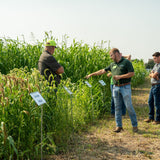
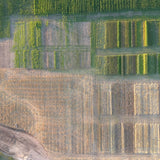
When corn interseeding stepped into the limelight a few years ago, we started asking the same questions. To help us and our customers answer these questions we began dedicated corn interseeding trials in 2023. We learned a lot that year and revised our methods and strategies for 2024 to hone in on what really works well. This information isn’t just for us…we want to share it with all our customers who are interested in adding diversity through corn interseeding. Here are some of the main takeaways from the 2024 trials.
- In general, when trying to maximize corn yields AND add diversity, 30” row spacing is the best option. If a producer is more focused on growing fall forage for livestock, skip row or 60” row spacing could be an excellent alternative.
- Brassicas and ryegrass tend to do well in this situation with limited sunlight. Clovers and vetch are also good options though maybe slightly less reliable.
- Flax and buckwheat can really shine in the beginning of the season though they tend to taper off once they reach maturity.
- Fall forage production potential in skip rows or 60 inch rows offers a huge opportunity for livestock producers. The 60 inch sample collected after corn harvested measured 11 as fed tons per acre with a crude protein of 24%.
Matching Context to Practice
Always keep in mind that the farmer’s goals are the most important factor in deciding how to go about the corn interseeding strategy - in short, context matters. These are just a few of the concluding observations we took from the trials. If you’re interested in reading the full report complete with yield results, specific species and ratios, and row spacing comparisons download our 2024 Corn Interseeding Trials Report. We’re excited to continue these trials in 2025 to see what else we can learn about the corn interseeding method!
Want to see the details? Fill out the form below to access the full report.